

Manchester workplace design and real estate trends
Date
16 January 2026
Read length
5 min
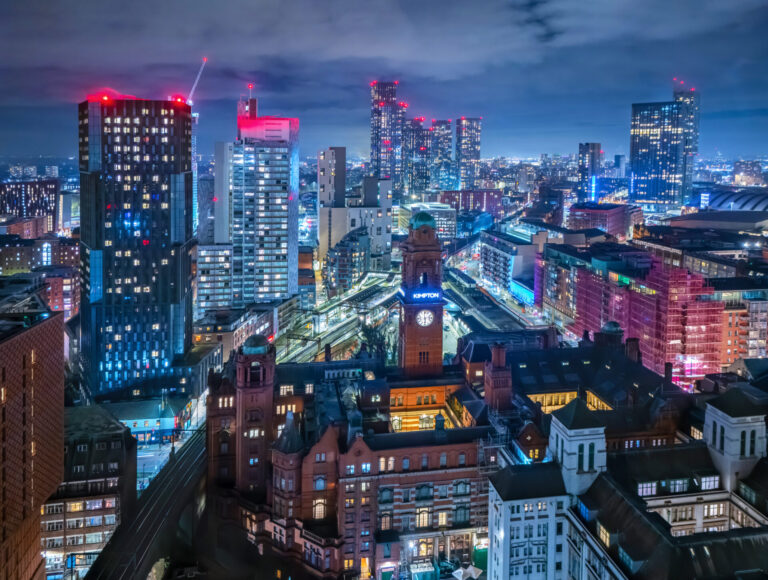
Manchester is a city on the rise. With a GDP bettered only by London, it has firmly cemented its position as the UK’s second city. From cutting-edge infrastructure and world-class education to elite sports and a thriving arts scene, Manchester is flourishing – drawing global attention, tourism, and investment. With a diverse and thriving employment sector and a strong talent pool, Manchester is a must for businesses looking to strengthen their UK presence.
The city’s appeal is perhaps best reflected in the calibre of businesses choosing to establish a presence there, with more than 80% of FTSE 100 companies now operating in Manchester, underscoring its status as a hub for innovation and enterprise. It’s also the birthplace of some of the country’s best-known brands including Rolls-Royce, the Co-Operative Group, The Guardian, and JD Sports, all of which remain in Manchester, as well as two of the world’s biggest football clubs in Manchester United and Manchester City.
The Manchester office space market
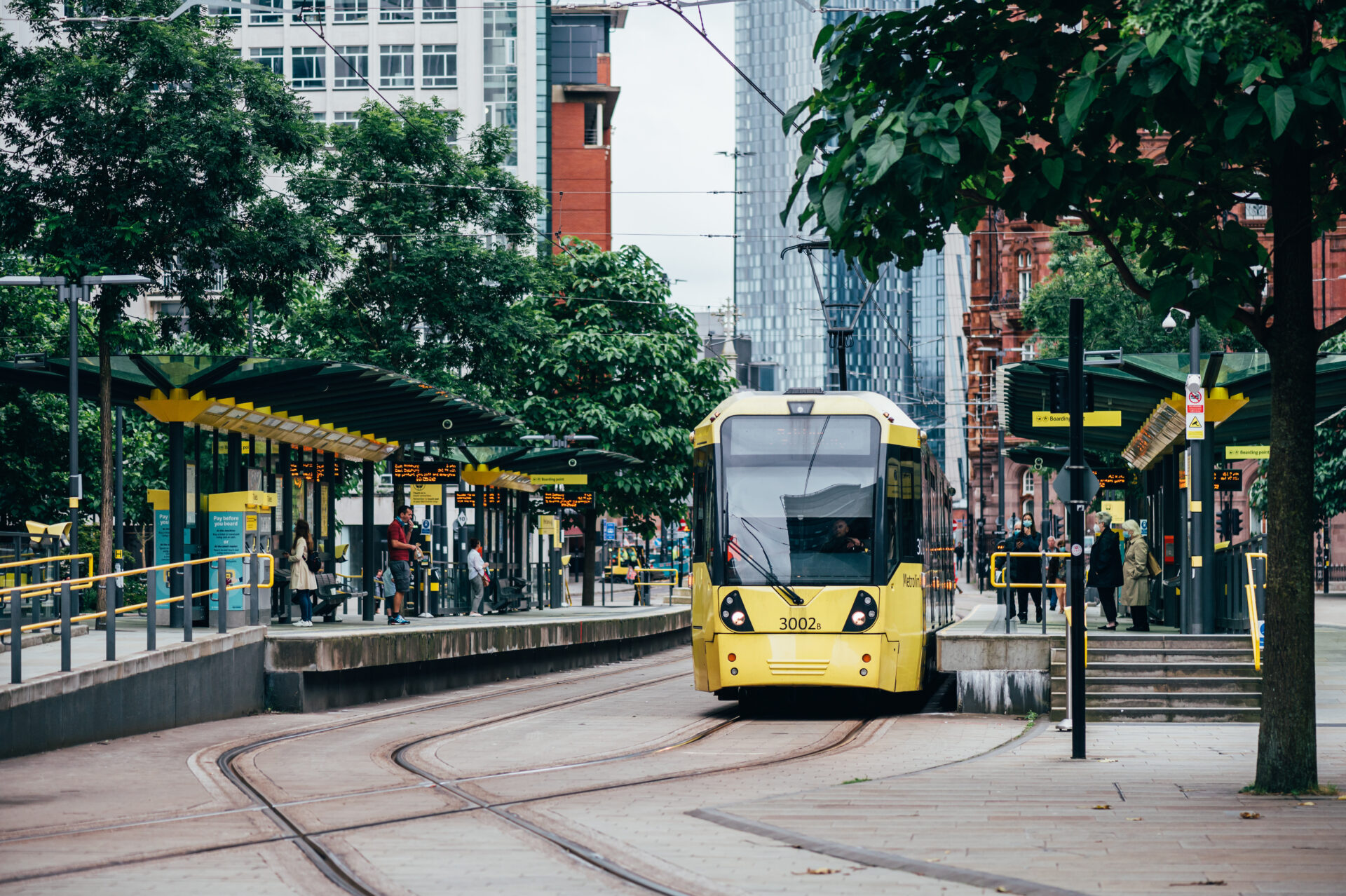
Savills reports that office take-up in Manchester reached 1.22 million sq ft in 2024, marking a 29% increase on 2023 and standing 17% above the five-year annual average. In the first half of 2025, take-up was 32% higher than the five-year H1 average and 10% above the ten-year H1 average, representing the strongest post-pandemic performance to date. Additionally, demand for Grade A space is at its highest level since 2019.
This surge in business activity is transforming Manchester’s real estate landscape. Demand for premium office space and flexible work environments is driving major developments across the city, from Grade A commercial properties to collaborative coworking hubs.
Ongoing developments, including NOMA in New Victoria and Circle Square within the Knowledge Corridor, are adding 2.4 million sq ft and 1.2 million sq ft of commercial office space respectively. These projects are designed to attract both global and regional occupiers, drawing top talent into the region and fostering creativity. This positions Manchester as more than a business hub, but as a thriving ecosystem where companies and people grow together. Building on this momentum, future schemes such as Mayfield in the Piccadilly area are set to deliver an additional 1.3 million sq ft of office space, further reinforcing the city’s role as a magnet for innovation and enterprise.
Workplace trends shaping the Manchester office landscape
The Technology, Media, and Telecommunications (TMT) sector
Manchester has rapidly emerged as a prime destination for technology, media, and telecommunications (TMT) businesses, with these firms accounting for around 37% of the take-up of new office space, considerably more than professional services at 10% and financial services at 9%.
Recognised as the UK’s most AI-ready city, Manchester has attracted major players such as Virgin Media, Activision, and Deliveroo over the past decade. The city also boasts the largest FinTech ecosystem outside London, reinforcing its reputation as a hub for innovation. Key districts like St John’s have become home to leading tech firms, with Manchester Goods Yard hosting giants like Booking.com and Softcat, while Circle Square thrives as a vibrant base for startups and scale-ups. This growth underscores Manchester’s transformation into a dynamic tech powerhouse.
Talent pool
Manchester is home to one of the most impressive talent ecosystems in Europe. With over 100,000 students across four universities, the city boasts one of the largest student populations and the highest graduate retention rate of any UK regional city. This ensures a steady stream of skilled graduates ready to fuel business growth.
The wider region adds even more depth, with 2.8 million people in the city region and 7.2 million living within an hour’s drive, giving Manchester the largest travel-to-work radius outside London. Combined with its strengths across multiple industries and concentrated clusters of expertise, the city offers companies access to a highly qualified, diverse, and sustainable workforce.
However, this abundance of talent also creates competition. Businesses looking to attract and retain the best people increasingly invest in premium office spaces with top-tier amenities, recognising that workplace quality is now a key differentiator in Manchester’s thriving market.
Sustainability and net-zero design goals
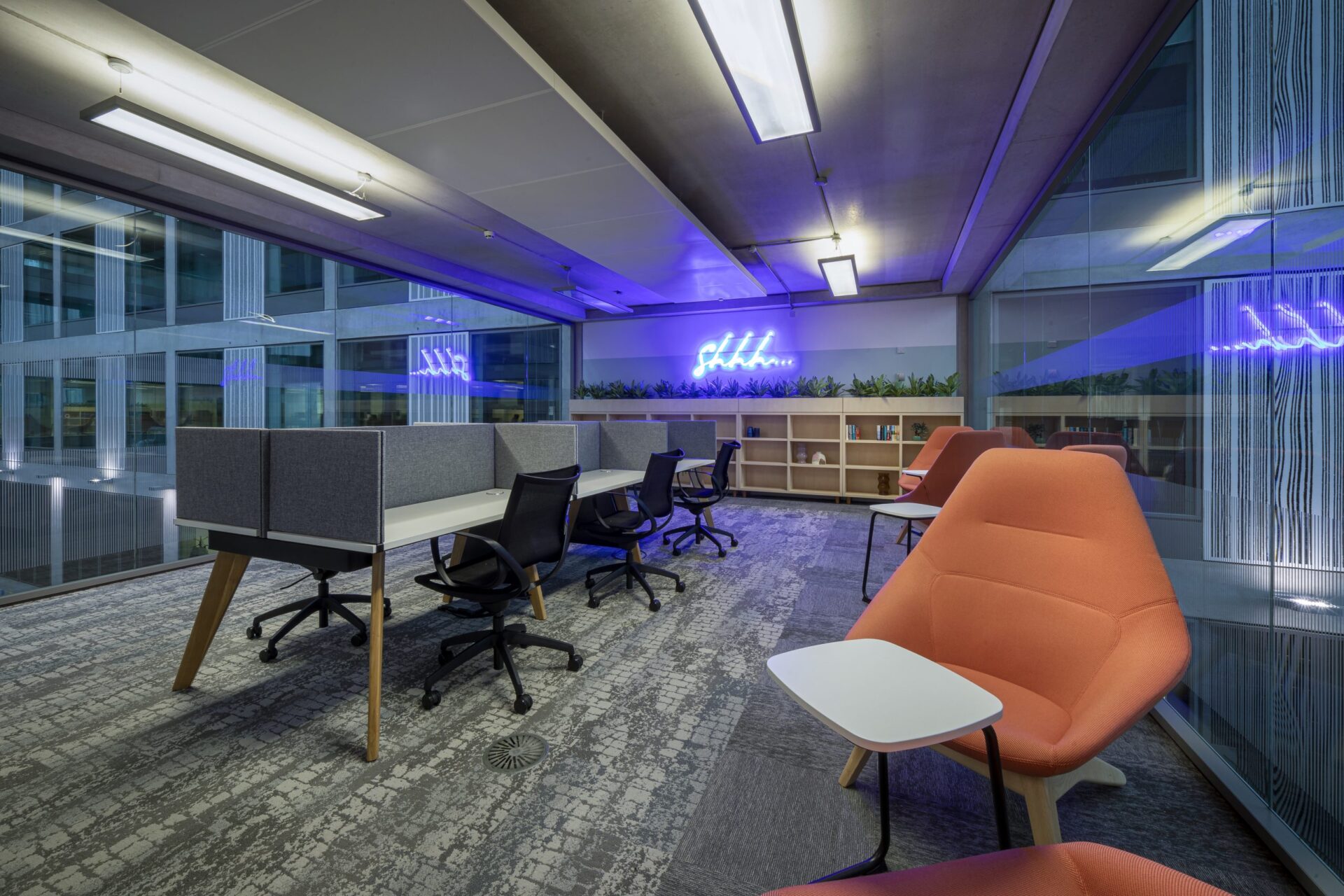
Manchester is England’s leading sustainable destination in the Global Sustainability Index which is reflected in a general desire across workplace design in the city to create spaces that are as good for the environment as they are the business occupying the space.
Refurbished Grade A space in the city with strong ESG credentials is outperforming properties with weaker credentials. Buildings that achieve high EPC ratings, BREEAM certification, and other sustainability benchmarks are increasingly seen as prime choices for occupiers. These credentials not only help landlords attract tenants but also enable businesses to create workplaces that appeal to top talent. Modern design is central to this – spaces that integrate energy efficiency, wellness features, and flexible layouts demonstrate a commitment to sustainability and employee experience. In a competitive market like Manchester, such design-led, ESG-compliant offices are becoming a strategic advantage for both landlords and occupiers.
Hybrid and flexible working layouts
The workplace has changed. With hybrid working now commonplace, employees no longer need to be in the office every day. Offices must become spaces that people choose to visit, offering experiences and benefits that remote work cannot. Businesses need more than expectation to bring teams back; they need environments that inspire collaboration and connection.
Demand for Grade A office space in Manchester is rising as companies look for environments that attract employees and support hybrid working. Landlords are responding with plug-and-play solutions and CAT A+ fit-outs that make moving in quick and easy. These ready-to-use spaces are particularly appealing for smaller units under 5,000 sq ft, where CAT A+ fit-outs can achieve premiums of £5–£10 per sq ft over standard CAT A rents. Many landlords now offer all-inclusive packages covering utilities and service charges, excluding business rates, to simplify costs. This shift reflects a broader trend: offices are no longer just places to work, they are strategic assets designed to deliver flexibility and experience.
Challenges facing Manchester office spaces
Shortage of Grade A space
Manchester’s growing reputation as a business hub has driven strong demand for Grade A office space, but supply currently falls short. This shortage has prompted some major players, including Warner Bros, to occupy Grade B and C properties instead. To retain these global firms long term, investment in upgrading existing buildings is essential. Improving the appeal of secondary stock will not only attract more international businesses but also secure current tenants for the long-term.
This situation is, however, creating momentum for Manchester’s secondary office market. With renewed confidence in workplace environments and a rise in back-to-office mandates, businesses are increasingly prioritising value and speed of occupancy. These are advantages that Grade B and C properties can deliver more effectively than new-build developments. As a result, secondary stock is regaining traction and emerging as a practical solution in a tight market.
From a landlord perspective, the lack of Grade A space means that they aren’t operating at Manchester’s Grade A prime rent which sits between £50-£60/sq ft. With the surge of uptake for Grade B and C spaces landlords are achieving rents below £40/sq ft, further underpinning the need to invest in office space and enhance their appeal.
How Claremont is shaping the future of Manchester office design
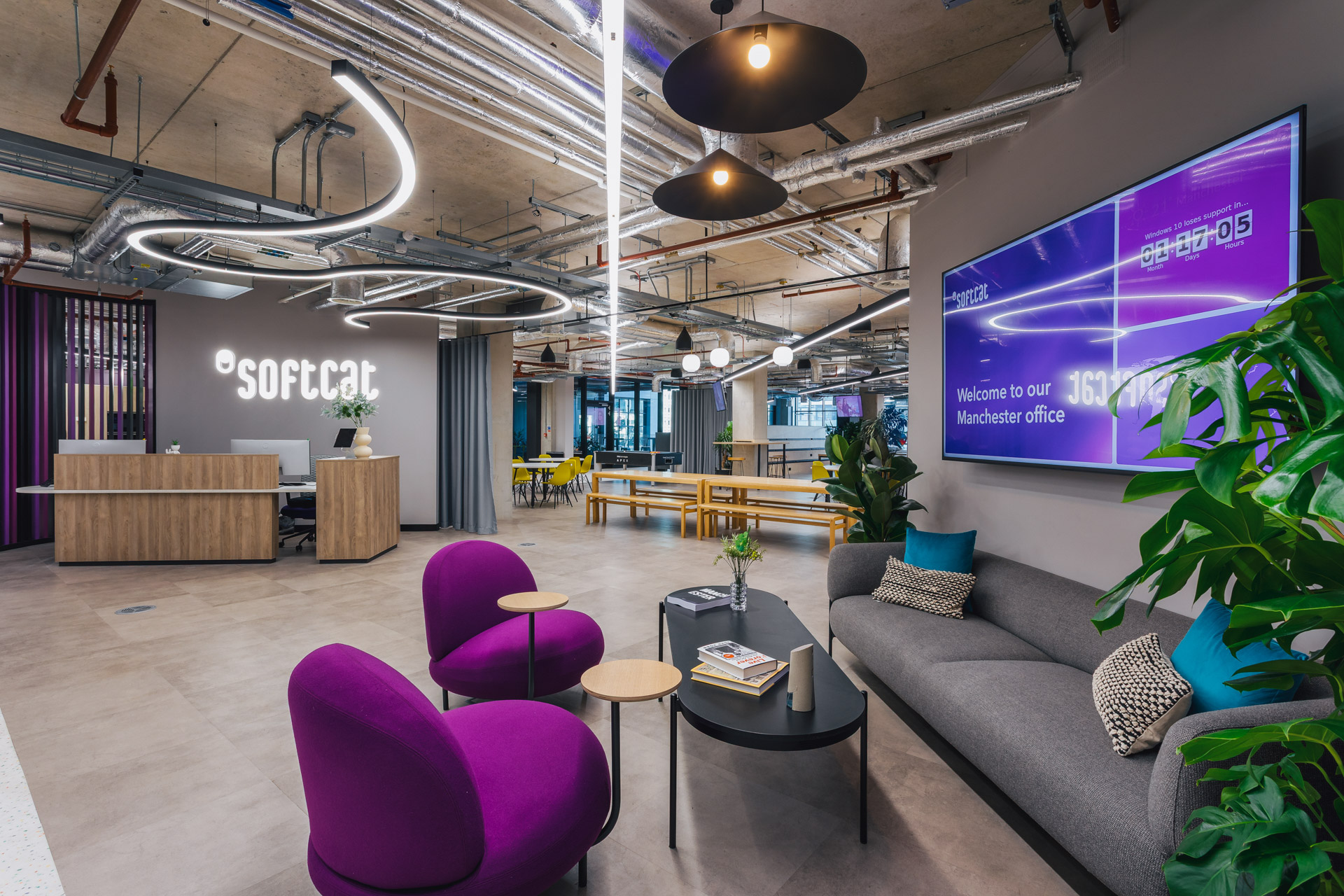
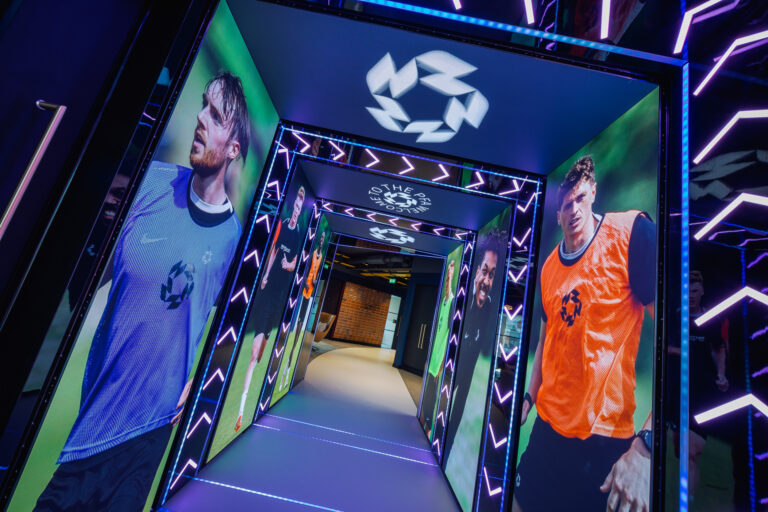
We’ve created some of Manchester’s most distinctive workspaces, capturing the city’s energy, spirit of collaboration, and resilience. Every project reflects a fresh perspective, shaped by the character and ambition that define Manchester. From designing stunning environments for Softcat and San Carlo to delivering award-winning spaces for AQA and The PFA, we’re helping shape the future of office life in the city.
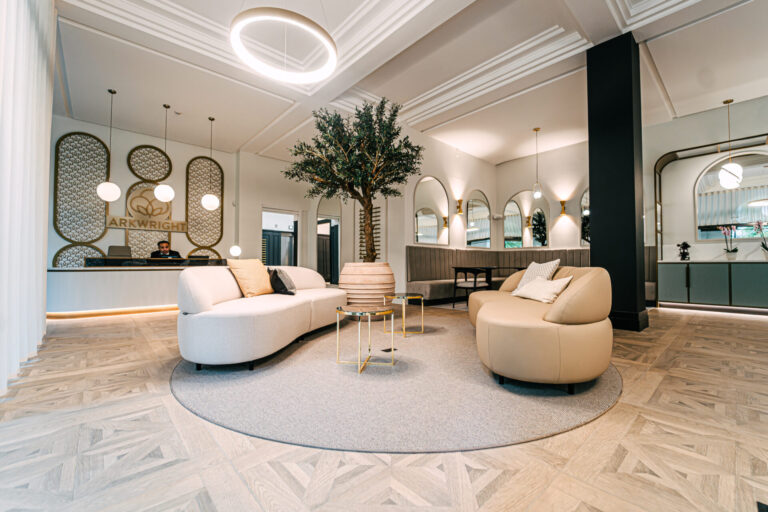
Beyond workplaces, we’re redefining Manchester’s skyline through transformative landlord projects on iconic buildings like Arkwright and 125 Deansgate – breathing new life into tired spaces and turning them into some of the most sought-after destinations for tenants.
Want to see more? Read our Manchester credentials and discover how we’re shaping the city’s next chapter.
Our thinking
Catch up with out latest thoughts on transforming the workplace, and explore our ‘Future Flexible – The Destination Office’ concept
See how we could help with your new office interior design or office design and build project here
Get in touch
We love nothing better than talking all things workplace and design – got a question, potential project or just need some guidance?
Drop us a note…