

What is a workplace strategy?
Date
22 January 2026
Read length
6 min
As the way we work continues to evolve, businesses are rethinking not just where work happens, but how it happens. This is where workplace strategy comes in.
Workplace strategy is a term that’s increasingly used across modern workplaces, but its meaning is often misunderstood. It’s about far more than office layouts or office design concepts. A workplace strategy is a structured, insight-led approach that aligns your workplace with wider business goals, helping to create an environment that supports performance, collaboration and long-term growth.
What is a workplace strategy?
A workplace strategy is a tailored plan that connects three key areas:
- Space (your physical environment)
- Workplace Technology (the tools that enable work)
- People (your culture, behaviours and ways of working)
The goal is to ensure that your workplace actively supports how your organisation operates, rather than holding it back.
In practice, this means considering not just how your office looks, but how it functions day-to-day. From hybrid working patterns to team collaboration, a workplace strategy defines how your space can enable better outcomes.
Why workplace strategy matters
For many organisations, the workplace has become more complex. Hybrid working, changing employee expectations, and the need for flexibility have all reshaped how offices are used.
Without a clear strategy, this can lead to:
- Underutilised space
- Disconnected teams
- Inefficient layouts
- Missed opportunities to improve performance
A well-defined workplace strategy helps address these challenges by creating a clear link between your business objectives and your working environment.
Key components of a workplace strategy
An effective workplace strategy brings together several elements to create a cohesive and high-performing environment.
1. Space Optimisation
This involves analysing how your space is used and designing it to support different types of work.
Rather than relying on fixed desks, modern workplaces often include collaborative areas, quiet zones and flexible workspaces.
The aim is to ensure every part of the office has a clear purpose.
2. Technology Integration
Technology plays a crucial role in enabling a seamless workplace experience, particularly in hybrid environments.
This might include technology such as desk and room booking systems, collaboration tools, and communication platforms that help teams work more effectively. Together, these solutions support a more seamless and connected workplace experience, particularly in hybrid working environments.
The right technology ensures teams can work effectively, regardless of location.
3. Workplace Experience
The workplace experience focuses on how employees interact with their environment and each other.
A strong workplace experience can improve engagement, support wellbeing and encourage collaboration.
Ultimately, it helps create a workplace that people want to be part of.
4. Data-Driven Decision Making
Workplace strategy should be informed by data, not assumptions.
By analysing utilisation and behaviour, businesses can:
- Identify underused areas
- Optimise layouts
- Make more informed decisions about space
This leads to more efficient and effective workplaces over time.
Workplace strategy and the future workplace
The concept of the future workplace is closely tied to workplace strategy.
As organisations adapt to new ways of working, the office is no longer just a place to complete tasks; it’s a destination for collaboration, connection and culture.
A strong workplace strategy helps businesses balance remote and in-office working while creating flexible, scalable environments that can evolve. It also enables organisations to respond more effectively to changing business needs and ways of working.
In this sense, workplace strategy is an ongoing process that evolves alongside your organisation.
Common workplace strategy approaches
While every organisation is different, there are several common approaches that underpin modern workplace strategies.
Activity-Based Working (ABW)
Providing different spaces for different tasks, allowing employees to choose how and where they work.
Hybrid Working Models
Combining remote and office-based work, supported by flexible spaces and technology.
Office-Centric Models
Maintaining a central office while enhancing its role as a hub for collaboration and culture.
Most organisations adopt a blend of these approaches, tailored to their specific needs.
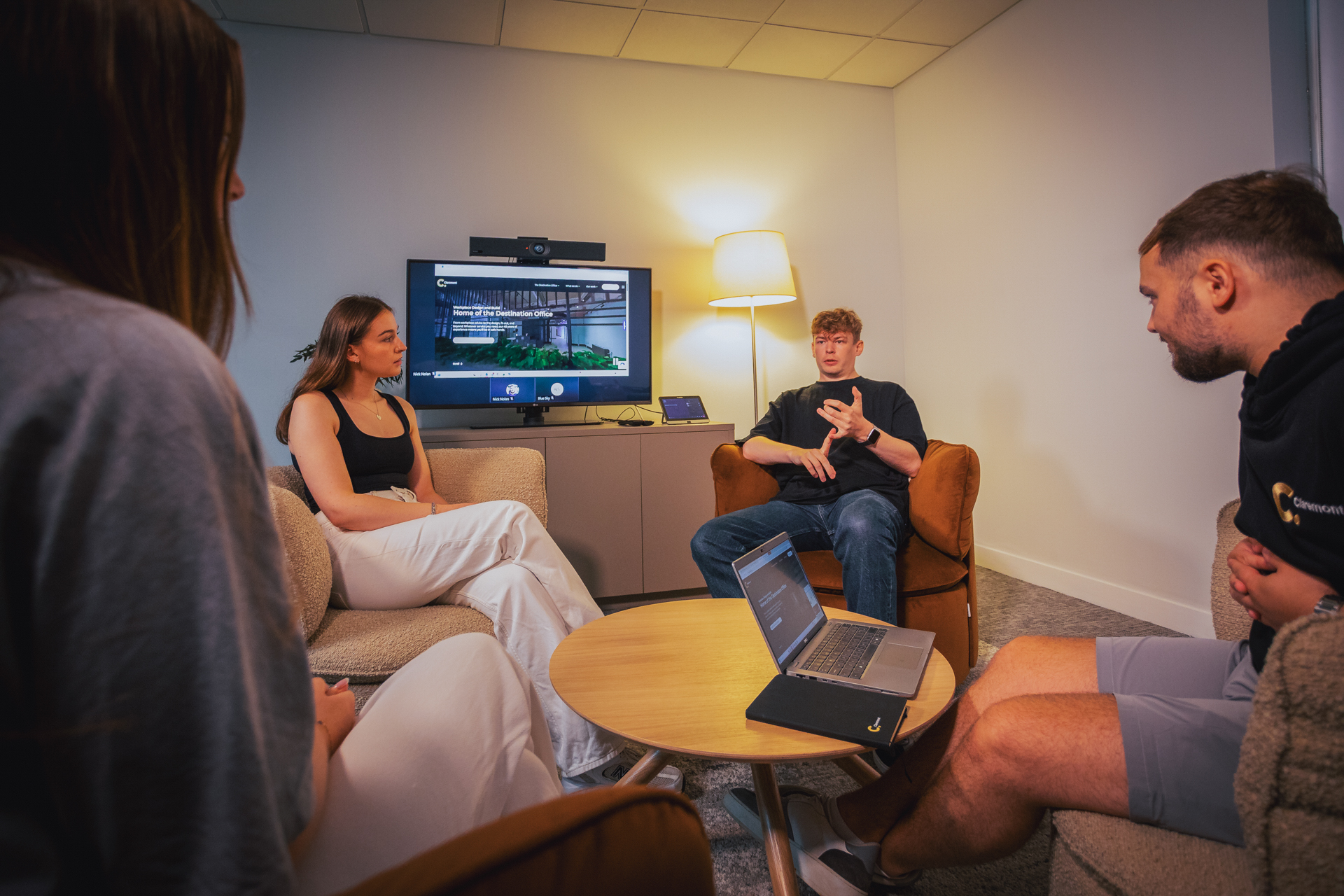
How Workplace Consultancy supports strategy
Developing a workplace strategy requires a clear understanding of your business, your people and how your teams operate.
This is where workplace consultancy plays a key role. Workplace Consultancy brings together research, data and insight to help organisations make informed decisions about their space.
This typically involves:
- Understanding how your teams work
- Identifying opportunities for improvement
- Creating a strategy aligned with your goals
- Translating that strategy into practical workplace solutions
The result is a workplace that is not only well-designed, but also aligned with performance and long-term success.
A workplace strategy is about creating alignment between your space, your people and your business goals.
In a world where ways of working are constantly evolving, having a clear strategy ensures your workplace can adapt, support your teams, and deliver real value over time.
Creating a workplace strategy that works
If you’re rethinking your workplace or planning for the future, a clear strategy is the starting point.
We help organisations develop workplace strategies that support performance, flexibility and growth, combining insight, design and delivery into a seamless process.
To stay up to date with the latest workplace trends and insights, explore our blog.
Our thinking
Catch up with out latest thoughts on transforming the workplace, and explore our ‘Future Flexible – The Destination Office’ concept

See how we could help with your new office interior design or office design and build project here
Get in touch
We love nothing better than talking all things workplace and design – got a question, potential project or just need some guidance?
Drop us a note…