

London workplace design and real estate trends
Date
16 March 2026
Read length
10 min
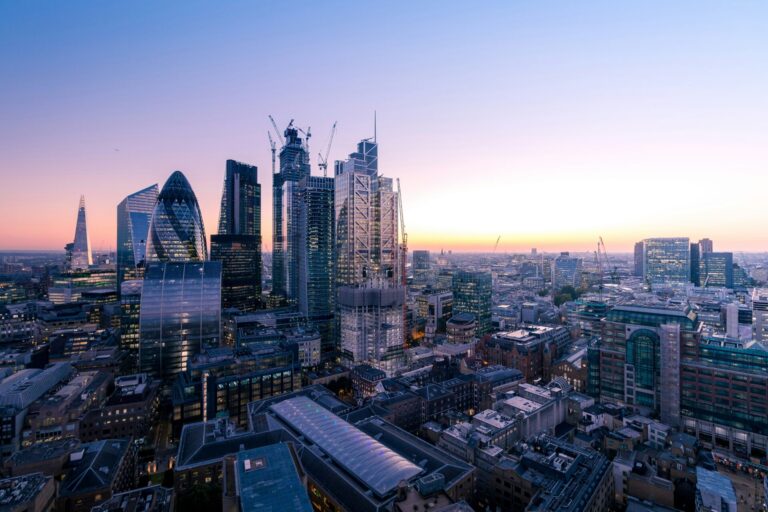
Across business, finance, culture and sport, London sets the benchmark for global excellence, and its commercial real estate market is no exception. From the City and Canary Wharf powering world trade to the West End’s vibrant creative and entertainment districts alongside sporting landmarks such as Wimbledon and Wembley, the built environment continues to adapt to the needs of a global capital.
London’s real estate market moves in step with this breadth of activity, delivering the offices, studios, labs and venues that keep the city at the forefront of international competitiveness. Ranked second only to New York in the Global Financial Centres Index, London continues to draw the world’s most influential businesses, with nearly 75 percent of Fortune 500 businesses operating in the city.
The London office space market
The London office and real estate landscape continues to evolve, with almost one third (32 percent) of all UK real estate investment concentrated in central London, where annual investment has averaged £18.1bn over the past decade, as per CBRE.
According to CoStar, London’s office market has improved significantly over the past year, with net absorption turning positive after five years of losses. Provisional take-up for 2025 in Central London was 11.4m sq ft with similar levels of take up expected in 2026. This shift reflects stronger tenant demand and a slowdown in new supply, which has reduced upward pressure on vacancy rates and further highlights London’s ongoing strength as a global leading business city by demonstrating its ability to attract major occupiers, support sustained investment, and maintain its competitiveness on the world stage.
Workplace trends transforming the London office landscape
The flight to quality and premium Grade A demand
Demand in London is firmly gravitating toward the best office space, with occupiers showing a strong preference for workplaces that feel modern, efficient and future ready. Savills report that so far in 2026, 91 percent of take up has been for Grade A offices, which shows just how quickly expectations are rising. On top of that, 78 percent of activity is focused on buildings rated BREEAM Excellent or Outstanding, reflecting how deeply sustainability now shapes decision making. Companies are choosing spaces that support their culture, their people and their commitments, and the market is responding with a sharper focus on quality at every level.
Hyper-flexible, multi-use work settings
Hyper‑flexible, multi‑use work settings are becoming a defining feature of London offices as occupiers look to squeeze more value, variety and experience from every square metre. Teams want spaces that can flip effortlessly between collaboration, quiet work, events and socialising, and landlords are responding with layouts that can morph throughout the day. Moveable partitions, stackable furniture and adaptable tech setups are now standard in new schemes, giving occupiers the ability to re‑shape their environment without costly reconfiguration. This shift is as much about enabling choice as it is about efficiency, allowing businesses to support different workstyles while keeping their footprint lean and futureproof.
Amenity led ‘Destination’ workplaces
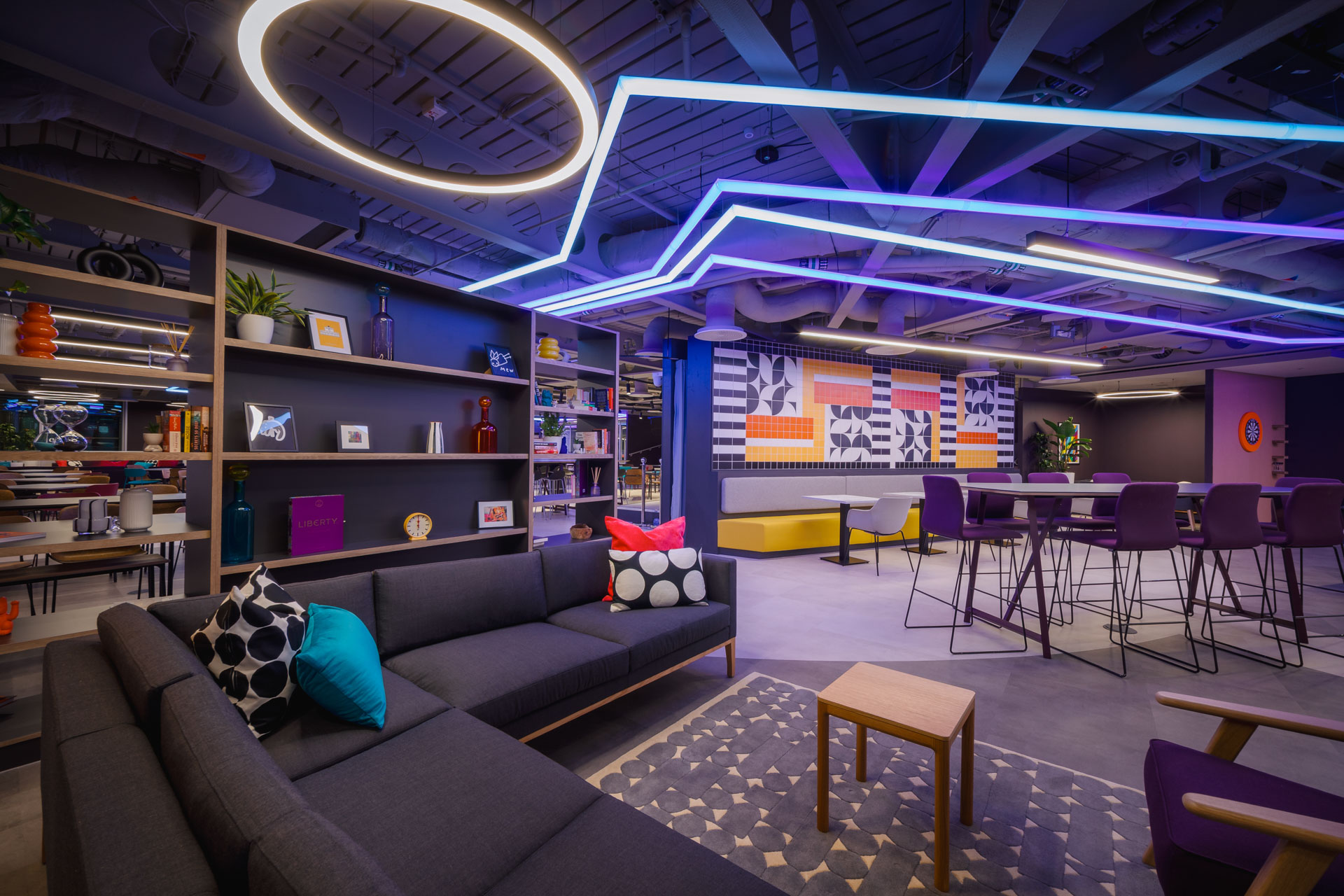
The modern workplace has evolved, and the role of office buildings has evolved with it. In a world where employees no longer need to be in the office every day, workplaces must become destinations that people want to visit. They need to offer experiences and amenities that remote work cannot replicate. London’s key commercial districts are adapting to this shift.
In the Square Mile, the market remains strong, with an average of £4.9 billion in annual office transactions and 5.1 million sq ft of office take‑up. At the same time, investors are directing around £557 million each year into other real estate assets, including hotels, mixed‑use schemes and residential buildings. This broader investment pattern reflects a growing appetite for more diverse, flexible urban environments.
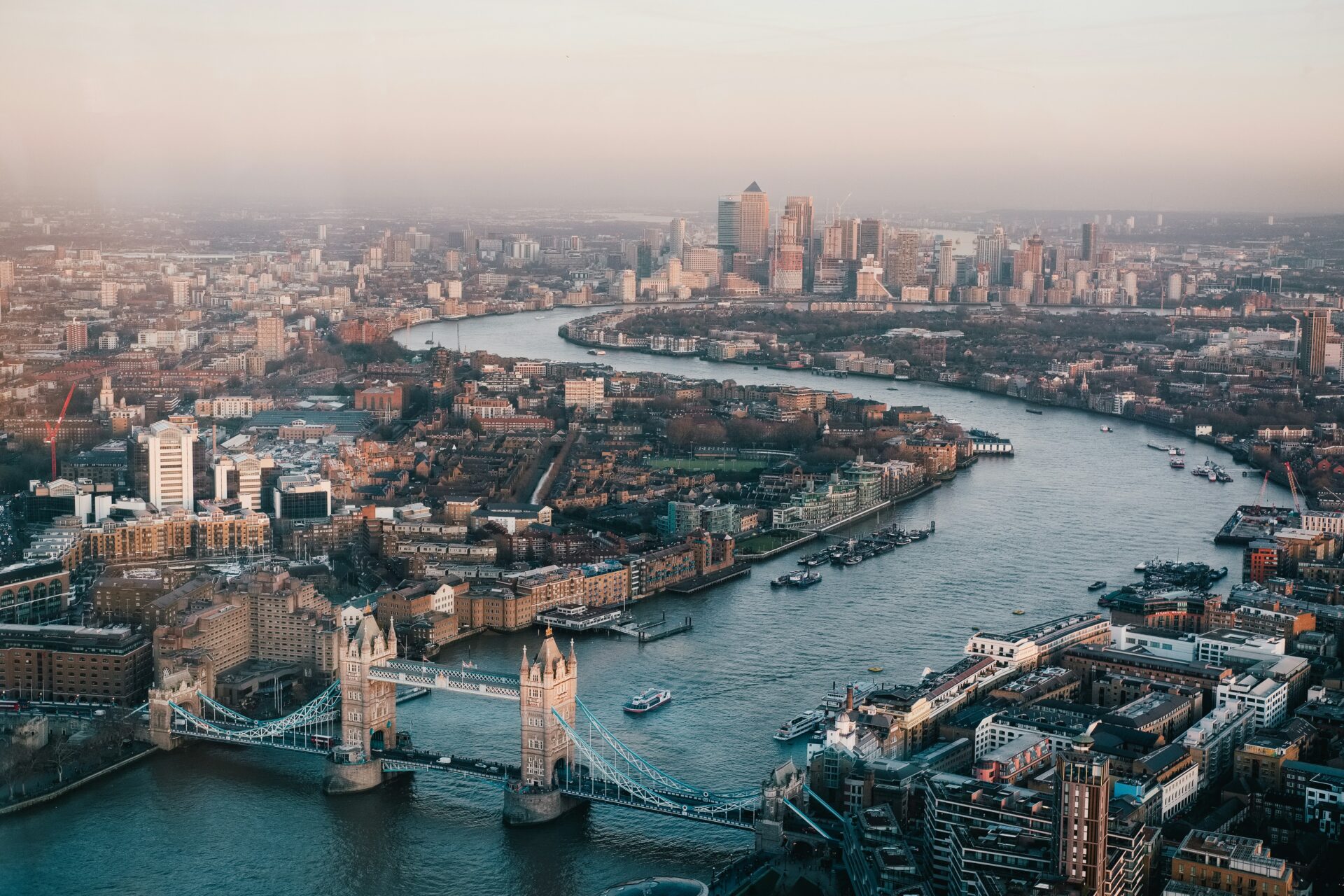
Canary Wharf is also changing. The district has diversified its offer, supported by new community events and improvements to public spaces. Examples include the recently unveiled Eden Dock and the Troubadour Canary Wharf Theatre, both of which have helped to increase vibrancy for occupiers and visitors. Once known primarily as a financial centre, the area is now attracting a wider range of companies, including those in the technology and innovation sectors.
Infrastructure upgrades across the city are further driving office demand. The Euston Station redevelopment is reshaping the local ecosystem and improving the attractiveness of the area for businesses. The arrival of the Elizabeth Line has also strengthened the Oxford Street corridor, where new office developments are achieving record rents. Many schemes in these improved transport locations are reaching up to 75 percent pre‑letting one to two years before practical completion, showing strong occupier confidence in well‑connected, amenity‑rich workplaces.
Together, these trends underline a pivotal shift in how workplaces are valued. For businesses, investing in amenity‑led, destination‑driven environments has become a strategic advantage, helping attract talent, support wellbeing and reinforce company culture. For employees, these spaces provide a sense of purpose, comfort and community that cannot be replicated remotely. As London continues to evolve, the most successful workplaces will be those that understand and embrace this new dynamic.
Challenges facing London office spaces
Managing high operating costs and London rental pressures
As rents continue to climb, the distinction between standard office space and truly experience‑led environments is becoming increasingly important, and companies are aligning their real estate strategies accordingly.
London remains one of the most expensive office markets in the world, and the cost pressures on businesses are intensifying. CoStar data shows average market asking rents now stand at £57.86 per sq ft, nearly double the national average of £30.32 per sq ft, while prime rents reach an average of £194.20 per sq ft, even exceeding £200 per sq ft in areas such as Mayfair. These figures highlight the financial realities facing organisations as they compete for high‑quality space in the capital.
In this environment, every square foot must work harder. Rising occupancy costs are pushing businesses to be more selective, prioritising buildings that deliver clear value by enhancing employee experience, supporting productivity and strengthening brand presence. This is further accelerating the shift towards highly functional, amenity‑rich, destination workplaces that justify their premium through design quality, wellbeing features and a compelling overall offer that delivers a return on investment for businesses.
Balancing heritage buildings with modern workplace needs
An iconic building or location always represents an attractive proposition for big businesses looking for a new space and there’s no shortage of them in London. Whether it’s unique architecture, historical significance or an unmistakable presence on the skyline, these buildings offer something that help a business stand out from the crowd when looking to impress clients or attract talent.
However, as the workplace evolves and demands for the best technology, sustainable workplaces, and employee wellbeing grow, the ability of heritage buildings to accommodate these demands comes under scrutiny.
Heritage buildings should be approached with creative, forward‑thinking solutions that meet modern workplace expectations. Organisations should prioritise integrating efficient systems, improving connectivity and introducing sustainable materials while protecting the character that defines London’s built environment. When this balance is intentionally designed, the combination of original features and contemporary interventions becomes both highly effective and visually compelling, resulting in workplaces that feel unique, high performing and memorable.
Earning the commute in a hybrid-first workforce
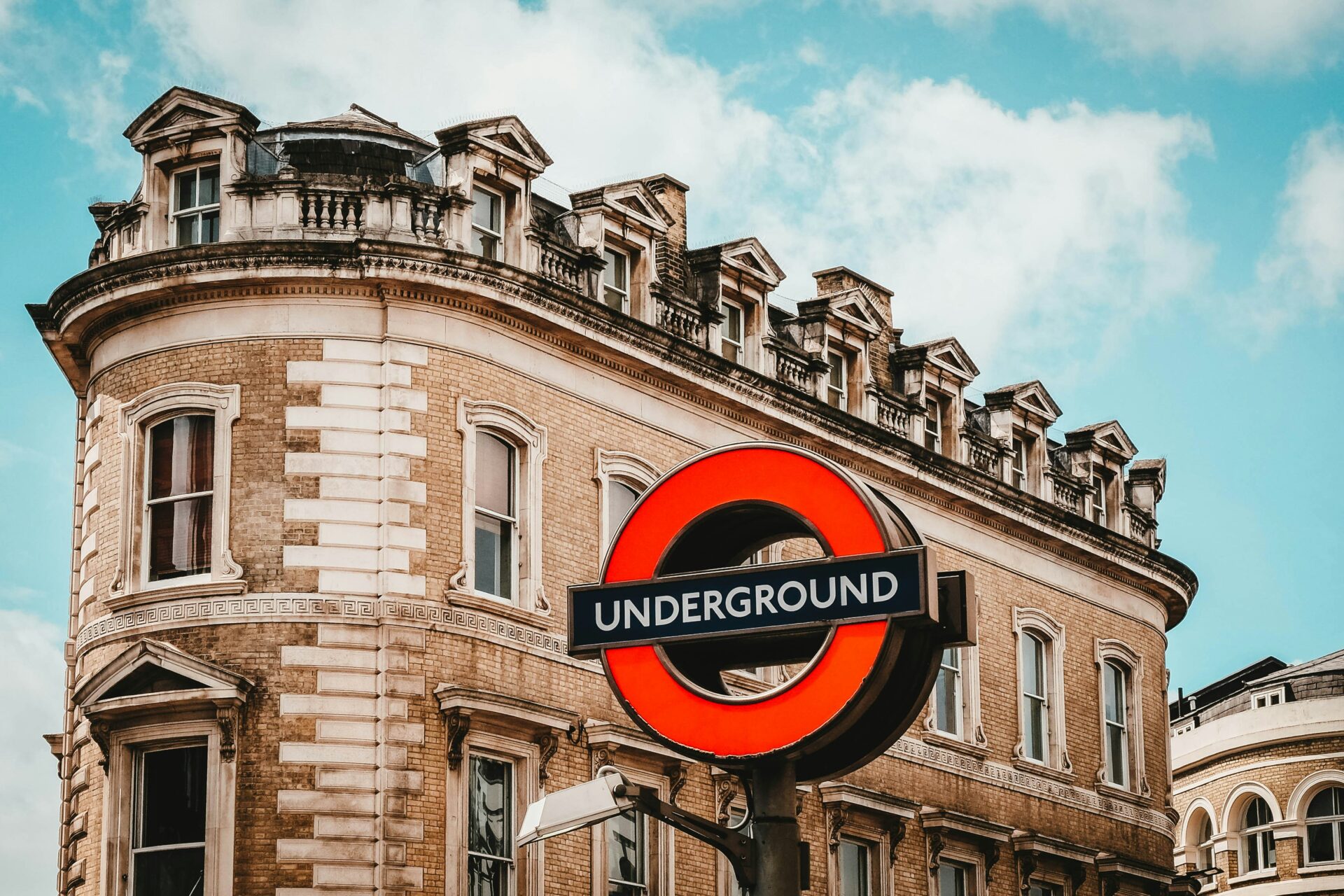
London’s hybrid workforce is increasingly selective about when they commute, especially as Tube fares continue to rise across nearly all zones in 2026, adding noticeable pressure to weekly travel costs. The reality of crowded and often uncomfortable Tube journeys raises the bar for what the office must provide. If employees are going to commute in, the workplace needs to offer meaningful collaboration and social value they can’t get at home.
At the same time, high inner‑city rents and smaller living spaces are pushing many Londoners outward. Families and long‑term renters are increasingly relocating to outer boroughs and commuter towns where homes are more affordable and space is easier to find, a trend strengthened by hybrid schedules that reduce commute frequency. With central one‑bedroom flats still averaging over £2,150/month and outer‑London rents around £1,595/month, cost pressures continue to reshape where workers live and how often they travel in. As a result, employers in the capital face greater pressure to make the office genuinely worth the commute, offering spaces and experiences that compete with the convenience of working from home.
Because of this, workplaces must deliver true added value. Employees overwhelmingly cite collaboration as their main reason for coming into the office, reinforcing the need for environments built around connection and teamwork. London businesses must shift towards experience‑led, commuter‑worthy spaces that justify the journey and support modern work expectations.
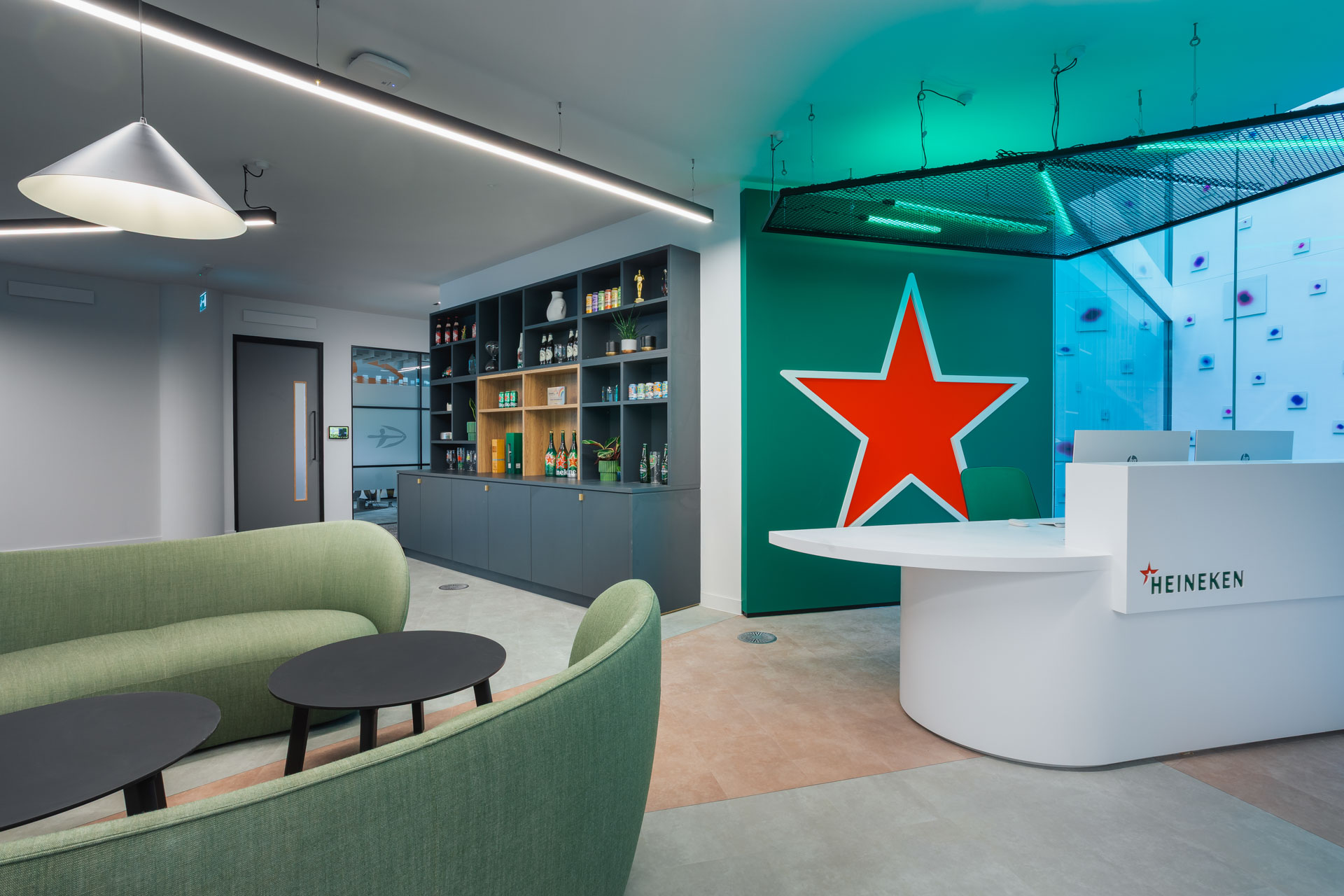
Our expertise in London office design
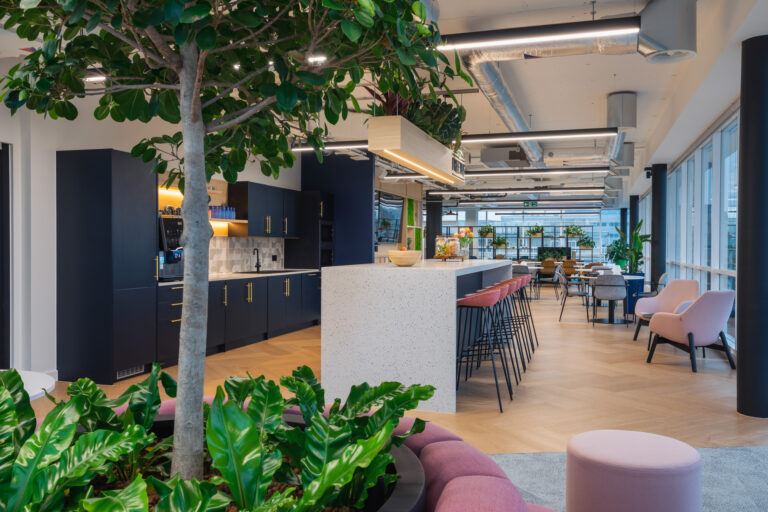
We’ve built a deep track record across the capital, shaping workplaces for some of London’s most dynamic and recognisable organisations. From tech‑driven environments for King and Softcat, to brand‑rich global headquarters for Heineken, to precision‑crafted legal workplaces for Shoosmiths and DAC Beachcroft, our work reflects the diversity and ambition of London itself.
Ready to explore more? Dive into our London credentials and discover how we’re creating the next generation of workplaces across the city.
Our thinking
Catch up with out latest thoughts on transforming the workplace, and explore our ‘Future Flexible – The Destination Office’ concept
See how we could help with your new office interior design or office design and build project here
Get in touch
We love nothing better than talking all things workplace and design – got a question, potential project or just need some guidance?
Drop us a note…