

Stay vs Go: How to make the right workplace decision for your business
Date
19 August 2026
Read length
4 min
For many organisations, there comes a point when they face a critical workplace decision: should they invest in improving their existing office, or is it time to relocate to a space that better supports their people and business goals? Stay vs go?
The answer is rarely straightforward. Today’s workplace decisions are influenced by far more than lease events and spatial requirements. Organisations must balance employee experience, business growth, operational efficiency, hybrid working patterns, and long-term strategic objectives. A workplace that served the business well five years ago may no longer support how people work today. This is why a structured, evidence-based approach is essential.

Why businesses are reconsidering their workplace
The workplace has changed dramatically over the past few years. Hybrid working, advances in technology, shifting employee expectations, and evolving business priorities have transformed what organisations need from their office environments.
For many businesses, a specific event triggers the stay vs go conversation:
- An upcoming lease event
- Business growth or contraction
- Mergers or acquisitions
- Rising occupancy costs
- Changing ways of working
- A desire to improve employee experience
- The need to attract and retain talent
While these factors often initiate the discussion, they shouldn’t determine the outcome. Instead, they provide an opportunity to assess whether the current workplace is helping the organisation achieve its objectives, both now and in the future.
Modern workplace expectations: Is your office still fit for purpose?
Many organisations are still operating from offices that were designed for a very different era.
Before the pandemic, workplaces were typically built around full-time office attendance, allocated desks, and a greater focus on individual work. Today, employees often split their time between locations, collaborate digitally, and expect a broader range of workplace settings to support different tasks.
As the role of the office has evolved, many organisations find themselves in spaces that no longer align with how their people work. The challenge is not always that there is too much space, but that the space is being used in the wrong way.
Common questions we hear include:
- Are we paying for space we no longer need?
- Do employees have access to the right types of work settings?
- Does the workplace support collaboration as effectively as focused work?
- Are underutilised areas driving unnecessary costs?
- Is our office helping us attract and retain talent?
The answers are rarely obvious from occupancy data alone. Lower attendance doesn’t automatically mean less space is required. In many cases, organisations need a different mix of spaces rather than a smaller footprint.

Similar challenge, different outcomes
Recent workplace strategy projects for two legal-sector clients demonstrate why every stay-versus-go decision requires a detailed understanding of employee needs, workplace performance, and future business requirements.
HGF, Leeds
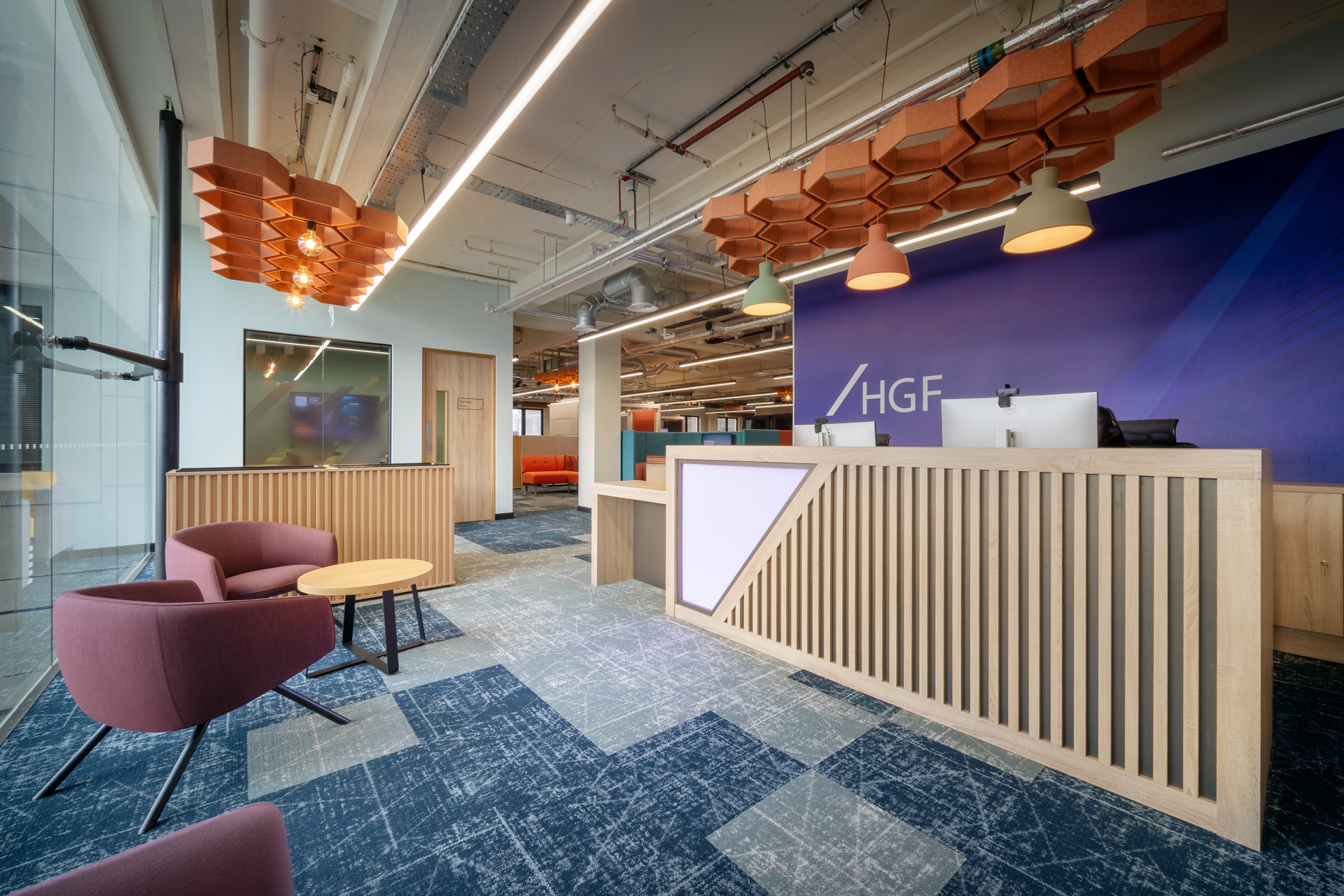
With a lease event approaching, HGF recognised that their Leeds office could be more efficient and wanted to explore whether to stay or relocate.
Following stakeholder workshops and a company-wide survey, we identified an opportunity to reduce their footprint from 19,000 sq ft to 10,000 sq ft. While they could have consolidated onto a single floorplate within their existing building, the research also highlighted broader considerations around location and local amenities.
As a result, HGF chose to explore new Grade A office space that better aligned with both their operational needs and employee expectations.
London Law Firm
Another legal client approached us with a similar challenge: an upcoming lease event and uncertainty around future space requirements.
Through leadership engagement, a company-wide survey, and a two-week workplace utilisation study, we found that their issue was not the amount of space they occupied but how it had been configured.
The firm’s traditional cellular office layout had remained largely unchanged, despite significant shifts in working practices. Our analysis showed that their overall footprint remained appropriate, but a greater proportion of the space needed to be dedicated to collaboration areas and meeting facilities.
In this case, transformation rather than relocation provided the right solution.
These examples illustrate why there is no universal answer to the stay-versus-go question. Organisations facing seemingly similar challenges can arrive at entirely different outcomes once employee insight, utilisation data, and business objectives are fully understood.
The value of Workplace Consultancy
Too often, workplace decisions are viewed solely through a property lens. The most successful organisations take a broader perspective, considering people, culture, workplace experience, and business strategy alongside real estate requirements.
One of the biggest misconceptions is that organisations must choose between staying or moving. In reality, the best solution often lies somewhere in the middle.
Many businesses discover that their existing workplace can continue to meet future needs with targeted changes. Reconfiguring space, introducing new workplace settings, enhancing employee experience, and implementing effective change management can unlock significant value without the disruption of relocation.
The key is understanding what the organisation genuinely needs before committing to a major property decision.

Making the right decision
The workplace remains one of the most significant investments an organisation makes. Yet many businesses continue to occupy environments that were designed for working patterns that no longer exist.
Whether you’re approaching a lease event, preparing for growth, supporting hybrid working, or simply questioning whether your current workplace is fit for purpose, the decision to stay vs go should be driven by evidence, not assumption.
By combining employee insight, workplace analytics, utilisation studies, estate planning, and future business requirements, organisations can make informed decisions that reduce risk, optimise costs, and create better experiences for their people.
At Claremont, our Workplace Consultancy team helps organisations uncover the evidence behind the decision. By aligning workplace strategy with business objectives, culture, employee needs, and future growth plans, we help clients determine whether they should stay, go, or transform, ensuring every workplace decision delivers long-term value.
Our thinking
Catch up with out latest thoughts on transforming the workplace, and explore our ‘Future Flexible – The Destination Office’ concept

See how we could help with your new office interior design or office design and build project here
Get in touch
We love nothing better than talking all things workplace and design – got a question, potential project or just need some guidance?
Drop us a note…