

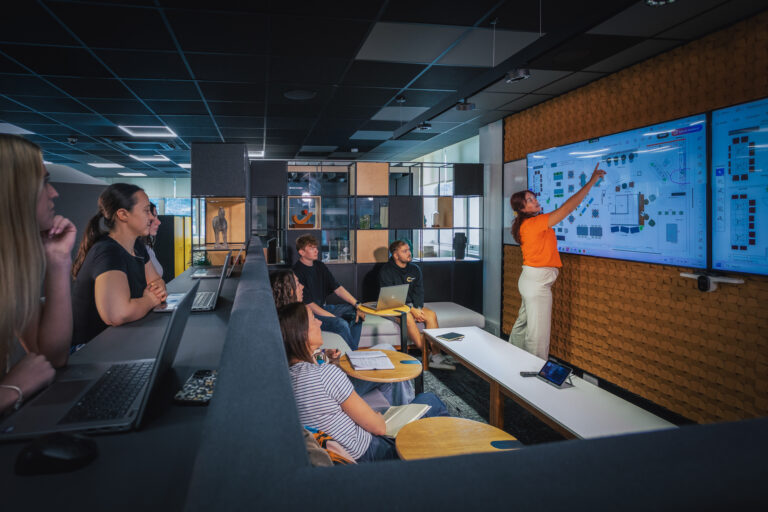
Future planning and projections: Building a workplace that grows with your business
Date
20 October 2026
Read length
1 min
Planning for tomorrow, not just today
Workplace decisions are long-term investments. Whether you’re signing a new lease, refurbishing an existing office, or reviewing your wider workplace strategy, it’s important to consider not only how your organisation operates today, but how it may evolve over the coming years.
Many organisations make real estate decisions based on current headcount and occupancy levels. The reality, however, is that businesses rarely stand still. Teams grow, structures change, working patterns evolve, and priorities shift. A workplace that meets today’s requirements may not provide the flexibility needed to support tomorrow’s ambitions.
A successful workplace strategy should look beyond immediate needs and consider how the workplace will support business growth, attract talent, and adapt to changing patterns of work over time.
The key question isn’t just “How much space do we need?” it’s “How might our space requirements change throughout the life of our lease?”
Turning data into meaningful insight
The foundation of an effective workplace strategy lies in understanding how people use space today, and how those behaviours are likely to change in the future.
Most organisations already hold valuable workplace data. Occupancy reporting, desk booking information, access control data, attendance trends, recruitment plans, and business growth forecasts all provide insight into current workplace performance and future demand.
However, data alone doesn’t create value. The real benefit comes from combining workplace analytics with business objectives to create actionable insights that support better decision-making.
By bringing together utilisation data, growth projections, and operational requirements, organisations can make informed workplace decisions based on evidence rather than assumptions. This reduces risk and provides greater confidence when making significant real estate investments.
Using workplace analytics to forecast future demand
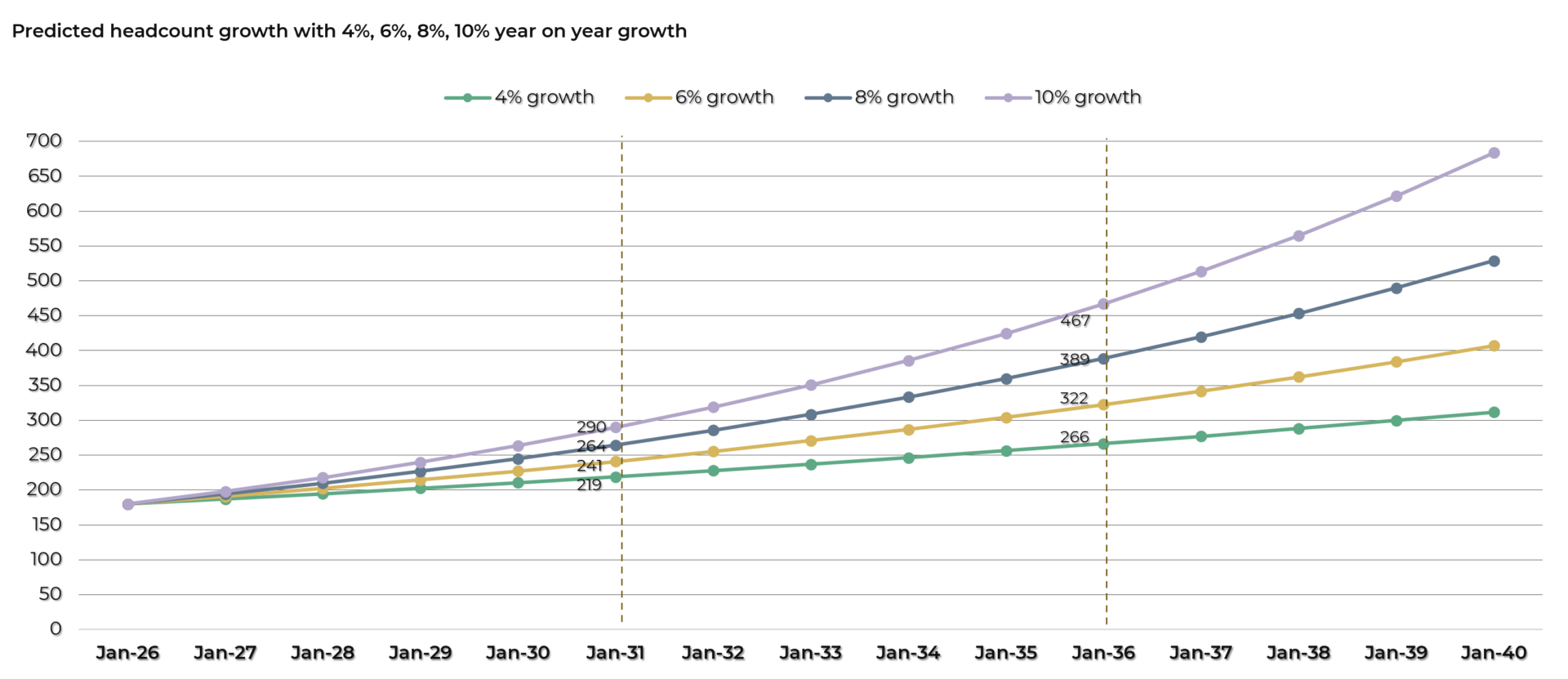
As part of a recent workplace strategy project, we worked with a UK Top 100 law firm that was experiencing sustained growth and needed to understand whether its existing office could continue to support the business throughout a ten-year lease.
The challenge was not only understanding current occupancy levels, but forecasting how workplace demand might evolve over the lifespan of the tenancy.
Using desk booking data, swipe-card access information, and projected headcount growth figures, we developed a detailed occupancy forecasting model to understand how utilisation was likely to change over time. This allowed us to identify future capacity pressures and assess whether the existing workplace could support the firm’s long-term business objectives.
Rather than providing a static snapshot of current workplace utilisation, we created a forward-looking view of workplace demand that reflected both changing employee behaviours and planned business growth.
Using these insights, we developed phased space planning guides and test-fitted designs that demonstrated how the office could evolve throughout the lease term. This enabled stakeholders to visualise future scenarios and make informed decisions about workplace investment, space allocation, and future flexibility.
The result was a clear workplace roadmap that aligned the firm’s real estate strategy with its growth ambitions – ensuring they had the confidence in that their workplace could continue to support the business both today, and for the duration of their lease.
Visualising the future workplace
Data and projections become significantly more powerful when they can be visualised. Using workplace analytics, occupancy forecasts, and business growth projections, organisations can gain a clear picture of how their workplace requirements may evolve over time.
Through space guides, occupancy modelling, and test-fit exercises, businesses can explore how their workplace design may need to adapt throughout the life of a lease. This helps stakeholders understand future opportunities, constraints, and investment requirements long before they become business challenges.
For organisations undertaking a workplace transformation, this approach provides confidence that today’s decisions will continue delivering value in the future.
At Claremont, our Workplace Consultancy team help organisations turn workplace data into practical insight, enabling them to make confident decisions about their people, spaces, and real estate investments. Through data-led workplace strategy, space planning, and workplace design, we help create environments that can adapt alongside changing business needs. Because the best workplaces are designed to suit employees today, and for years to come.
Our thinking
Catch up with out latest thoughts on transforming the workplace, and explore our ‘Future Flexible – The Destination Office’ concept

See how we could help with your new office interior design or office design and build project here
Get in touch
We love nothing better than talking all things workplace and design – got a question, potential project or just need some guidance?
Drop us a note…