


Sustainable Office Design: How Businesses Can Build Greener Workspaces
Date
9 January 2026
Read length
1 min
Sustainable office design is about creating workplaces that are better for people, businesses and, of course, the planet. It goes beyond choosing recycled materials or adding more plants to the office. A truly sustainable workplace considers how a space is designed, built, used and adapted over time.
For modern businesses, sustainability is no longer a nice-to-have. It is increasingly central to how organisations manage costs, attract talent, support wellbeing and demonstrate responsibility to clients, employees and stakeholders.
The good news is that building a greener workspace does not always require starting again from scratch. Whether you are planning a full office refurbishment, moving into a new space or looking to improve your existing workplace, there are practical ways to make your office more sustainable, efficient and future-ready.

What is sustainable office design?
Sustainable office design focuses on reducing the environmental impact of a workplace while creating a healthy, practical and engaging environment for the people who use it.
This can include improving energy efficiency, choosing responsible materials, reusing existing furniture, reducing waste, maximising natural light, supporting wellbeing and designing spaces that can adapt as business needs change.
A sustainable office should not be treated as a separate design style. It should be part of the overall workplace strategy. The aim is to create a modern office space that works hard for your organisation, while using resources more thoughtfully.
Why sustainable office design matters
A well-designed sustainable office can benefit businesses in several ways. It can help reduce energy consumption, lower long-term operating costs, support environmental goals and improve the overall workplace experience.
It can also strengthen brand perception. Employees, clients and partners increasingly expect businesses to take sustainability seriously. A greener office can act as a visible expression of those values, showing that the organisation is committed to long-term responsibility rather than short-term fixes.
Sustainable office design can also support employee wellbeing. Access to natural light, better air quality, comfortable furniture, acoustic control and calming materials can all influence how people feel and perform at work.
In short, sustainability is not just about the building. It is about creating a workplace that is efficient, responsible and enjoyable to use.
Start with what you already have
One of the most sustainable decisions a business can make is to reuse, repurpose or improve what already exists.
Before replacing furniture, finishes or layouts, it is worth reviewing what can be retained. Existing desks, chairs, storage, flooring, lighting or partitions may be suitable for reuse, refurbishment or relocation elsewhere within the building.
This approach can help reduce waste, lower costs and avoid unnecessary carbon impact from manufacturing and transporting new products. It also supports a more circular approach to workplace design, where materials and furniture are kept in use for as long as possible.
At Claremont, this is often an important part of the conversation. Sustainable design is not always about buying more. Sometimes, it is about making smarter use of what is already there.
Improve energy efficiency
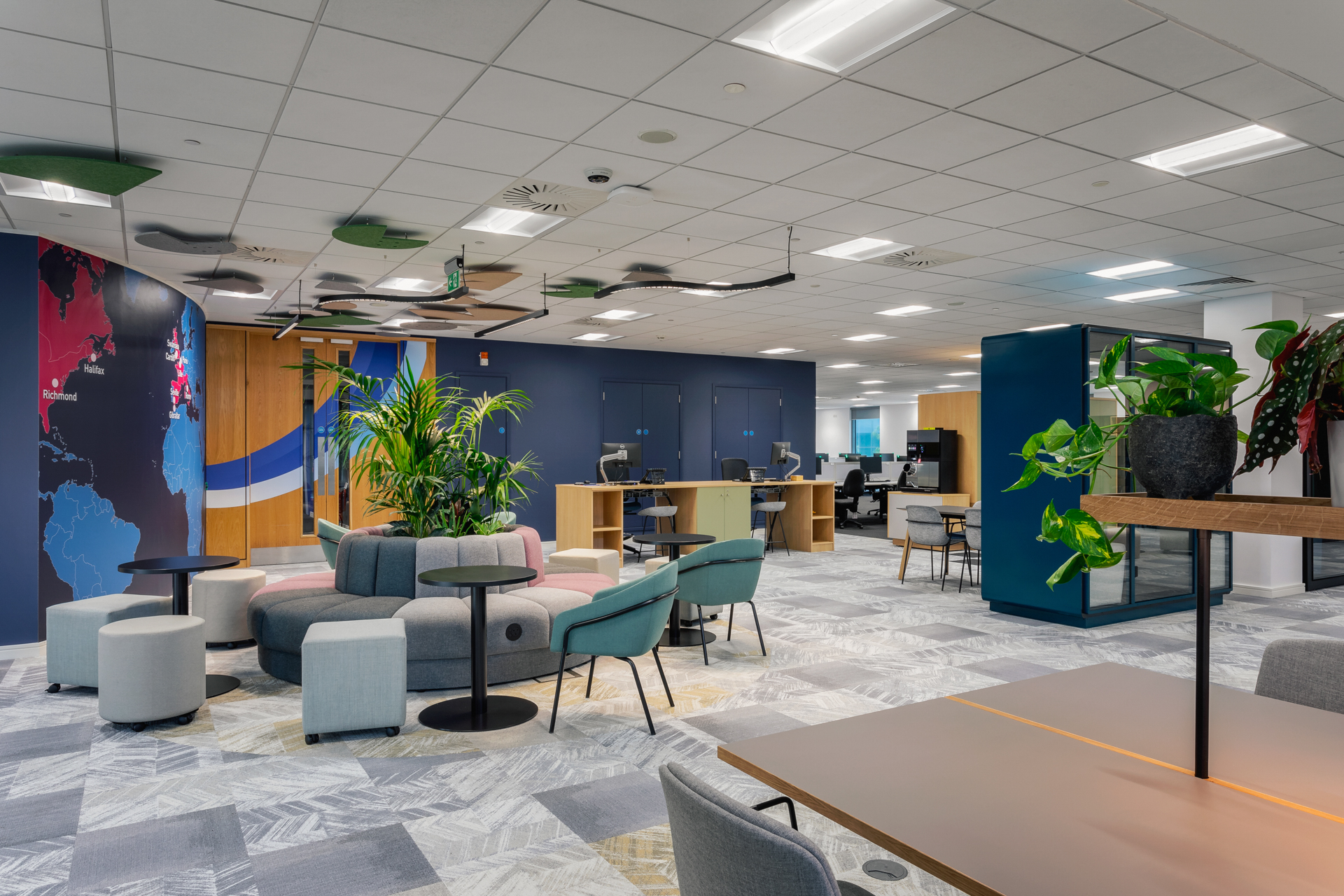
Energy efficiency is one of the most important parts of sustainable office design. Lighting, heating, cooling, ventilation and technology can all have a significant impact on how much energy a workplace uses.
Simple changes can make a meaningful difference. LED lighting, motion sensors and daylight-responsive controls can help reduce unnecessary energy use. Smart heating, ventilation and air conditioning systems can also help maintain comfort while avoiding waste.
Where possible, office layouts should make the most of natural light. This can reduce reliance on artificial lighting and create a more pleasant working environment. However, daylight needs to be considered carefully alongside glare control, screen use and comfort.
In a modern office interior design project, sustainability and user experience should work together. The goal is not just to save energy, but to create a workplace that feels comfortable, efficient and easy to use.
Choose sustainable materials and finishes
Materials play a major role in the sustainability of an office. Flooring, furniture, wall finishes, fabrics, worktops and joinery all carry environmental impact, so choices should be made carefully.
Where possible, businesses should consider materials that are responsibly sourced, durable, recyclable, reused or made with recycled content. Timber from certified sources, recycled metals, low-impact fabrics and long-lasting furniture can all help create a more sustainable workspace.
Low-VOC paints, finishes and adhesives can also support better indoor air quality. This is particularly important in enclosed workplaces where people spend long periods of time.
Durability matters too. A product that lasts longer, performs better and can be repaired or reused may be more sustainable than a cheaper option that needs replacing quickly. Sustainable office design should always consider the full lifecycle of a product, not just how it looks on day one.
Design for flexibility and longevity
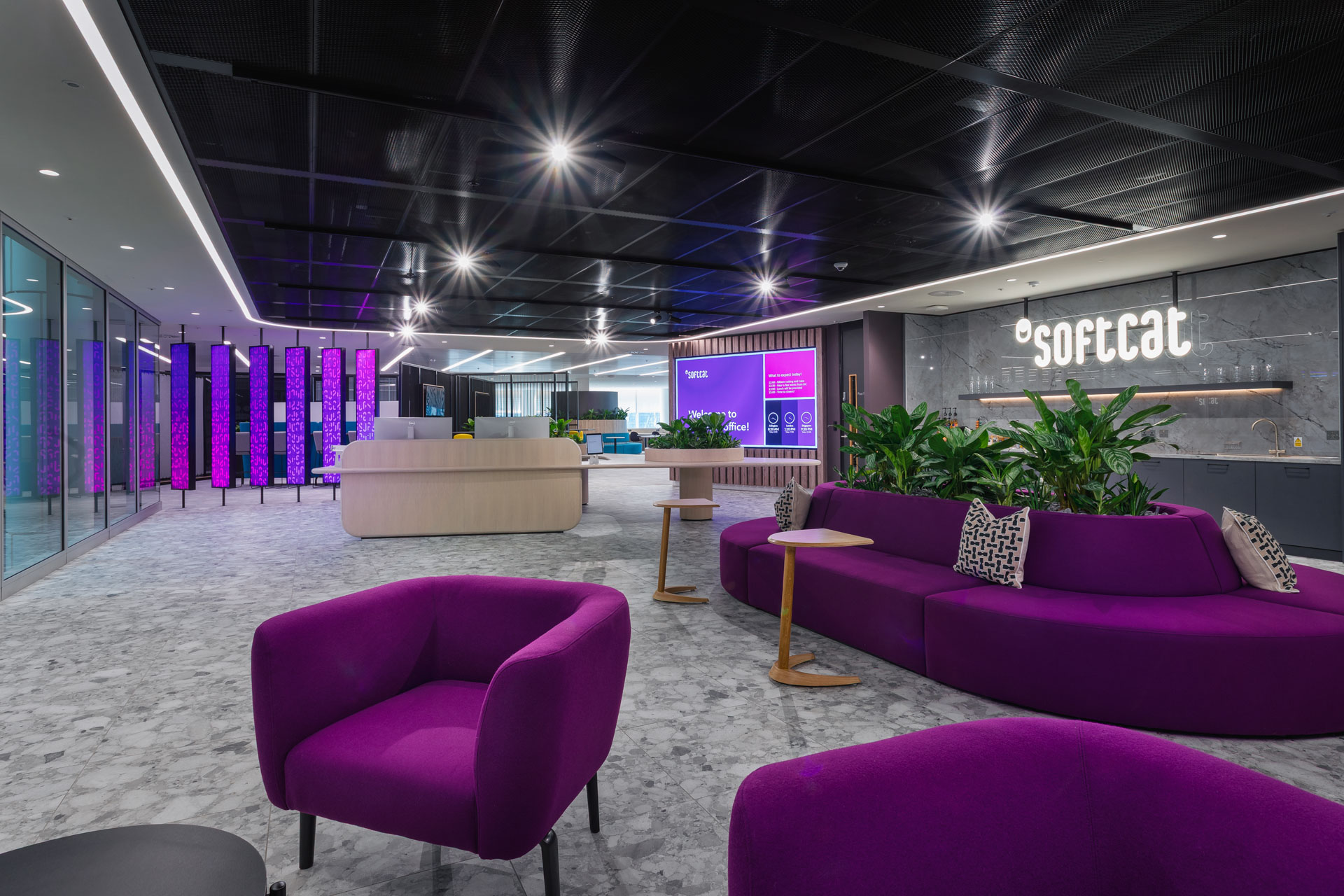
A sustainable office should be able to adapt. Businesses change, teams grow, hybrid working patterns shift and technology evolves. If a workplace is too fixed, it may need major alterations sooner than expected.
Designing for flexibility can help extend the life of the space. This may include modular furniture, adaptable meeting rooms, movable partitions, multi-use collaboration areas and layouts that can respond to changing occupancy levels.
A flexible office is often a more sustainable office because it reduces the need for repeated major refurbishments. It also helps businesses get better long-term value from their workplace investment.
This is particularly important in a hybrid working world. Rather than designing around fixed desk numbers alone, businesses should consider how the office can support collaboration, focus, social connection, learning and client experience.
Bring nature into the workplace
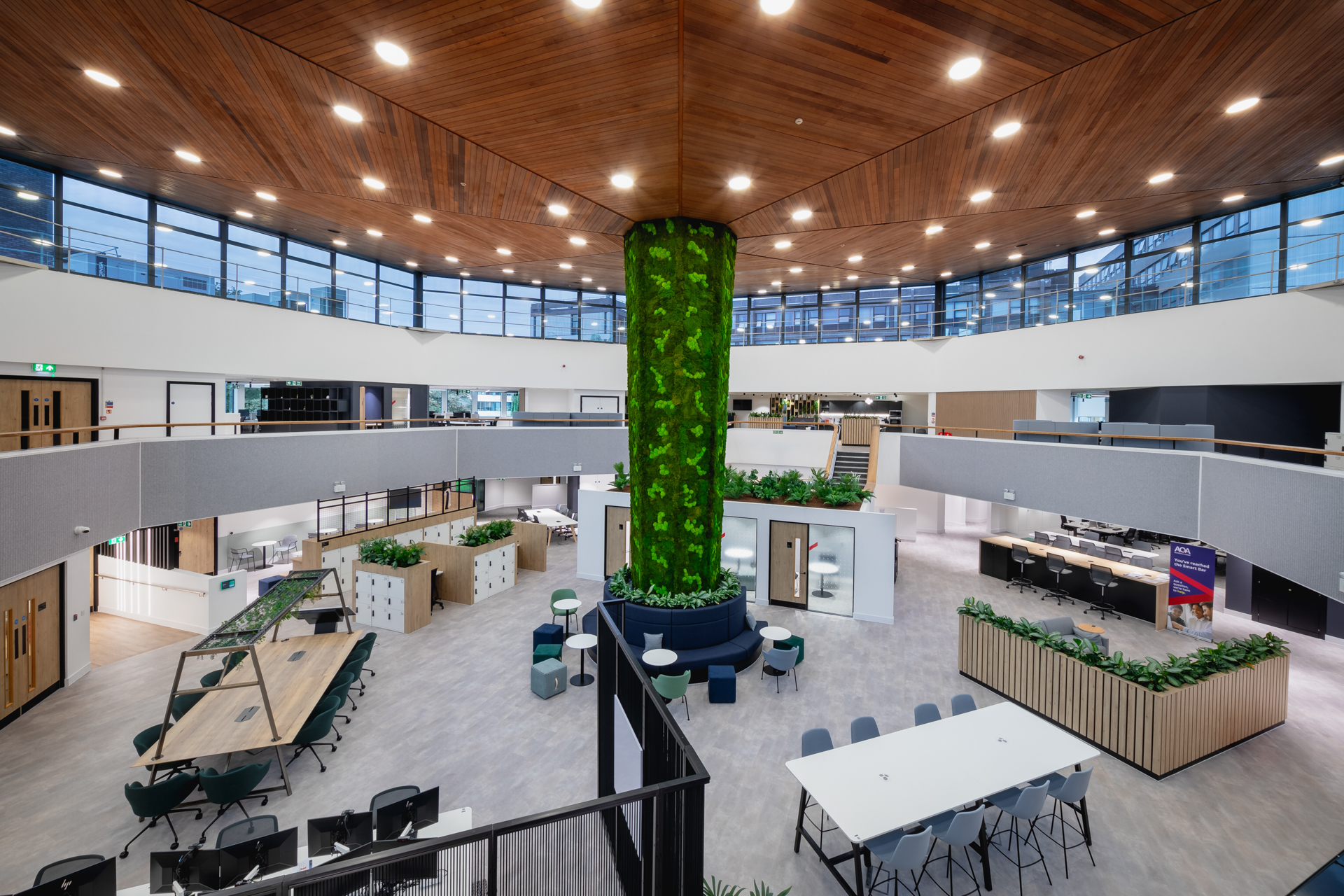
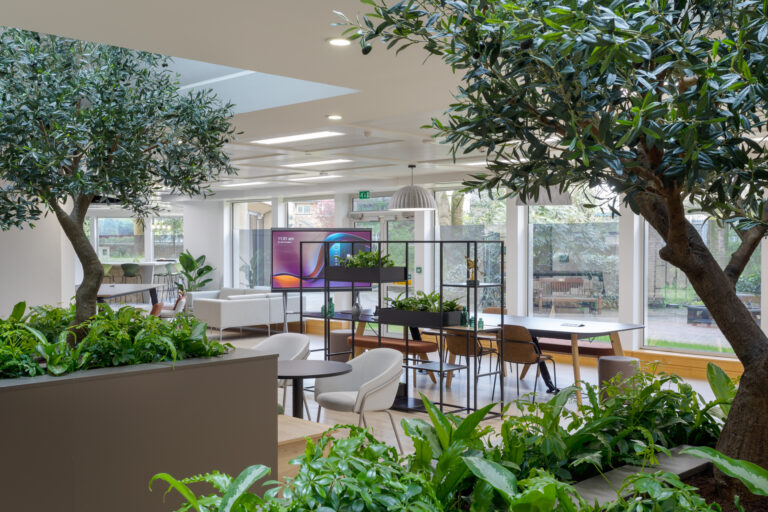
Biophilic design is another important part of creating greener and healthier workspaces. This means bringing natural elements into the workplace through planting, natural materials, daylight, organic textures and views to the outside where possible.
Indoor planting, timber finishes, soft natural colours and access to daylight can help create a calmer, more welcoming environment. These features can support wellbeing while also making the office feel warmer and more ‘human.’
However, biophilic design should be thoughtful rather than decorative. Plants need to be maintained, natural materials need to be suitable for commercial use and layouts should support how people actually work.
When used well, biophilic design can help transform a workplace from somewhere people have to be into somewhere they want to spend time.
Reduce waste during refurbishment
Sustainability should be considered during the refurbishment or fit-out process, not just once the office is complete.
This means thinking carefully about waste management, material ordering, packaging, transportation and what happens to furniture or finishes being removed from the space. Items may be reused, donated, recycled or responsibly disposed of.
Working with the right partners can make this process easier. Designers, fit-out teams, furniture consultants and suppliers should all be aligned around sustainability goals from the start of the project.
Clear planning can help reduce unnecessary waste, avoid over-ordering and ensure sustainable decisions are built into the project rather than added on at the end.
Create a sustainable workplace strategy
The most successful sustainable offices are shaped by strategy, not guesswork. Before making design decisions, businesses should understand how their workplace is currently used and what they want it to achieve in the future.
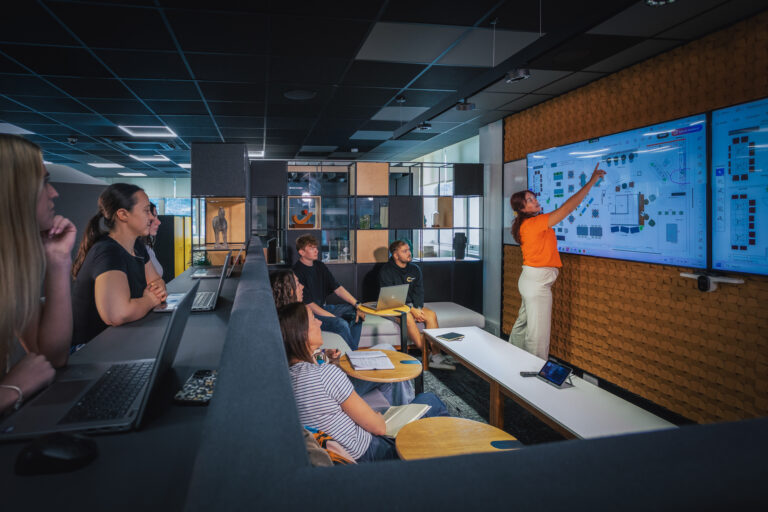
Workplace consultancy can help identify opportunities to reduce underused space, improve layouts, support hybrid working and create a better employee experience. This ensures sustainability is connected to real business needs.
For example, a business may discover that it does not need as many fixed desks, but does need more high-quality collaboration areas and hybrid meeting rooms. Another organisation may find that reusing existing furniture and improving lighting delivers a more sustainable outcome than a full replacement.
By combining data, employee feedback and design expertise, businesses can create workplaces that are greener, more efficient and more effective.

How Claremont is helping to deliver sustainable solutions
At Claremont, we help organisations create sustainable workplaces that balance environmental responsibility with people-focused design.
Our approach brings together workplace consultancy, interior design, fit-out, furniture and technology to create offices that support modern working patterns and long-term business goals. From reusing existing furniture and specifying responsible materials to improving space efficiency and designing adaptable environments, we help businesses make practical sustainability choices that work.
We believe sustainable office design should feel purposeful, achievable and aligned with the way your organisation operates.
Build a greener workspace for the future
Sustainable office design is not about one single decision. It is about making a series of smarter choices across space, materials, energy, furniture, technology and user experience.
By reducing waste, improving efficiency, choosing responsible materials and designing around people, businesses can create greener workplaces that support both performance and wellbeing.
Whether you are refurbishing an existing office or planning a new modern office space, Claremont can help you create a workplace that is practical, sustainable and ready for the future. Contact us today.
Our thinking
Catch up with out latest thoughts on transforming the workplace, and explore our ‘Future Flexible – The Destination Office’ concept
See how we could help with your new office interior design or office design and build project here
Get in touch
We love nothing better than talking all things workplace and design – got a question, potential project or just need some guidance?
Drop us a note…